

You Need a Presence,
Not a Side Hustle
How founders, CEOs, and experts build real credibility online without becoming content creators.
The content challenge
The expectation vs. the reality
Somewhere along the way, the advice given to business leaders started sounding a lot like the advice given to influencers. Post every day. Be authentic. Show your face. Engage with your audience. Build a personal brand.
For someone running an actual business, that advice creates an impossible expectation. You're not a creator. You don't have two hours a day to plan, shoot, edit, and publish. You're running a company, managing a team, serving clients, and making decisions that have real consequences. Content is important, but it can't become a second job, because you already have a first one.
The result, for most business leaders, is one of two outcomes. Either they try to keep up, burn out in a few weeks, and go silent. Or they never start at all, knowing they can't sustain the pace everyone seems to recommend. Both outcomes lead to the same place: an online presence that doesn't reflect the credibility they've actually earned.
Content is evidence
Why visibility still matters even if you're not a creator
The reason content matters for business leaders isn't the same reason it matters for influencers. An influencer's content is the product. For a founder or CEO, content is the evidence. It's what a prospect, an investor, a potential hire, or a referral partner finds when they look you up before deciding whether to take the next step.
That search happens more than most leaders realize. Before a meeting gets accepted, before a proposal gets read, before a referral gets followed up on, someone checks your LinkedIn, your website, your Google results. What they find either reinforces the impression you want to make or quietly undermines it.
You don't need to be a content creator to pass that test. You need a body of work that exists, looks professional, and says something real. The volume doesn't have to be massive. The consistency does.
online presence with purpose
What "enough" actually looks like
The threshold for credibility is lower than the content industry wants you to believe. You don't need daily posts. You don't need viral moments. You don't need to dance on TikTok or film yourself walking through an airport.
What you need is a steady, professional presence that signals three things: you're active (not dormant), you're serious (the quality reflects your caliber), and you have a perspective worth hearing (the content says something, it doesn't just fill space).
For most business leaders, that translates to a few pieces of content per week, published consistently across two or three platforms, maintained over months rather than sprinted for a few weeks and abandoned. The compound effect of that consistency is what builds credibility, not any single post.
Where a content partner helps
Three models for getting there without doing the work yourself
The reason most leaders default to either DIY or nothing is that those feel like the only two options. They're not. There's a middle ground where you contribute your thinking and someone else handles everything downstream.
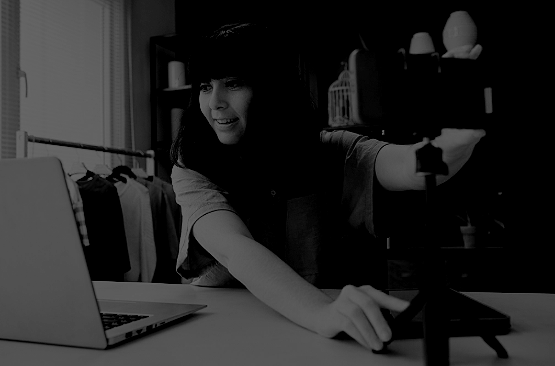
The first model is self-recorded, fully produced. You spend 10-15 minutes a week recording short guided sessions on your phone, talking about what you know, responding to prompts designed around your expertise. A production team handles the editing, formatting, captioning, and publishing. Your time investment is minimal. Your output is consistent and professional. This works for leaders who are comfortable on camera but can't sustain the full content-creation workflow on their own.
The second model is studio-captured, no homework. You sit down with a production crew once a quarter for a few hours. That single session is broken into months of content, short clips, quote graphics, written posts, all derived from one conversation. Between sessions, you do nothing. This works for leaders who want professional content but won't sustain a weekly recording habit, either because they're uncomfortable on camera alone or because the discipline just doesn't stick.
The third model combines both. A quarterly studio session provides the high-production anchor content, and a light self-recording rhythm between sessions fills in with more personal, authentic material. This produces the deepest body of work but asks the most of your time, still far less than creating content yourself, but more than the other two models.
Common objections
The reluctance leaders have, and the honest response
The most common pushback from leaders considering a content partnership is "I don't have anything interesting to say." This is almost never true. What they mean is "I don't know how to turn what I know into content." Those are very different problems, and the second one is solvable.
A good content partner doesn't wait for you to come up with ideas. They interview you, prompt you, pull out the thinking you do every day that you've stopped noticing is valuable because it's just how you think. The expertise is already there. The system is what's missing.
What this has to do with credibility?
Credibility isn't built by going viral. It's built by being findable, consistent, and substantive over time. When someone looks you up and finds a professional, active presence with real perspective behind it, they take you more seriously before the first conversation. That's the entire value proposition, not fame, not followers, just the confidence that comes from knowing your online presence matches the business you've actually built.
The leaders who benefit most from this aren't the ones who love content. They're the ones who hate the idea of becoming a creator but understand that being invisible isn't an option anymore.
Next steps
Where to start
If you're exploring what a content partnership looks like in practice, every engagement starts with a Strategy Foundation, a one-time platform audit and content strategy that builds the plan before any production begins. From there, the right model depends on how you want to participate: self-recorded, studio-captured, or both.
The clearest next step is a conversation about where you are and what fits.